Table Of Content
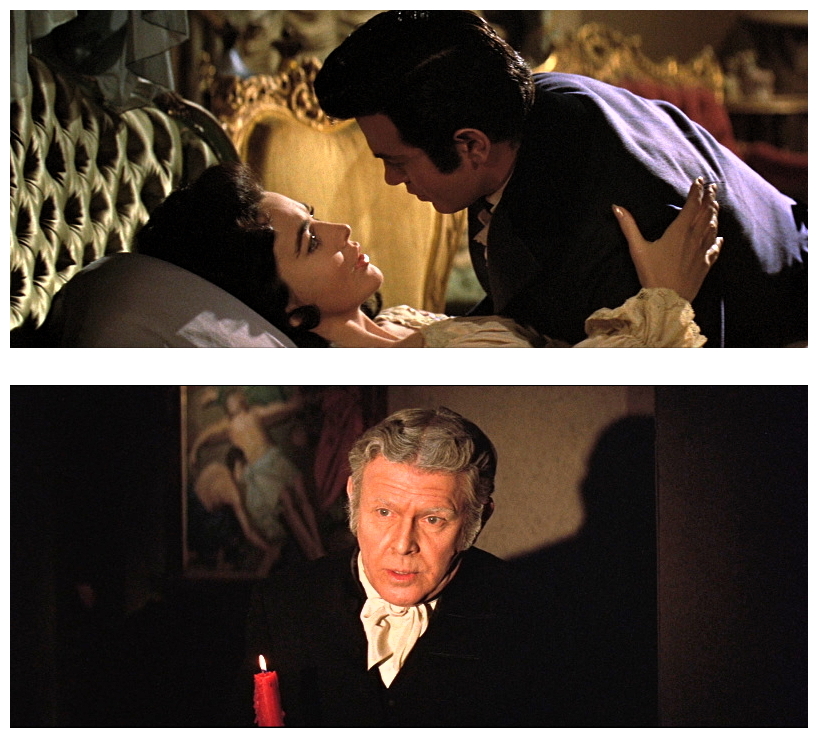
Some of the CGI, particularly one scene involving bodies falling from the sky, is unintentionally funny. Problematically, Flanagan tends to conflate queerness with depravity and sexual fluidity is punished here with an unnerving flourish. But the show remembers to be actually scary, with truly inspired uses of chimps, mirrors and sprinkler systems. There’s no question that The Fall of the House of Usher ranks among Flanagan’s finest works.
Further reading
As the series draws to a close, Verna—whose name is an anagram of the titular bird in Poe's classic 1845 poem "The Raven"—is shown placing an item on each of the Usher's graves that represents their respective downfalls, closing the loop of her karmic retribution. Decades later, once it became clear that Verna was the one killing off the Usher children, Madeline tried to sidestep the deal by convincing Roderick to kill himself. But Verna wasn't willing to let him get off that easy and brought him back to face the full extent of his reckoning, the death of his granddaughter Lenore (Kyliegh Curran), the only morally good Usher.
“The Haunted Palace”
She shapeshifts, and knows everything, always letting the Usher children know exactly what the universe needs them to know before their time is up. But things aren't always as they seem; the final episode takes us inside everything that lingers, bringing everything full circle. Presenting vintage Poe stories filtered through Mike Flanagan's deliciously dark lens, The Fall of the House of Usher will get a rise out of horror fans. SparkNotes Plus subscription is $4.99/month or $24.99/year as selected above. TO CANCEL YOUR SUBSCRIPTION AND AVOID BEING CHARGED, YOU MUST CANCEL BEFORE THE END OF THE FREE TRIAL PERIOD. You may cancel your subscription on your Subscription and Billing page or contact Customer Support at Your subscription will continue automatically once the free trial period is over.
Your password reset email should arrive shortly.
Review: The Fall of the House of Usher is a gloriously Gothic horror delight - Ars Technica
Review: The Fall of the House of Usher is a gloriously Gothic horror delight.
Posted: Fri, 13 Oct 2023 07:00:00 GMT [source]
Flanagan has form with making tributes to some of horror’s most beloved oeuvres. He took on Shirley Jackson in The Haunting of Hill House (which was fabulous), Henry James in The Haunting of Bly Manor (spooky but saccharine) and Christopher Pike in The Midnight Club (meh). Thankfully, Flanagan and Poe’s sensibilities prove a winning pairing, staying on the edge of terror without cascading into jump scares and sentimentality. Guilt permeates every frame of Flanagan’s Poe universe, and buys into not so much the horror as the terror. An interpretation which has more potential, then, is the idea that the ‘house of Usher’ is a symbol of the mind, and it is this analysis which has probably found the most favour with critics. ‘The Fall of the House of Usher’ can also be analysed as a deeply telling autobiographical portrait, in which Roderick Usher represents, or reflects, Poe himself.
” “No, not before,” he replies in one of the show’s many glimpses of Flanagan’s viciously dark sense of humor. (Poe had one too.) Roderick has been haunted by all his awful children who have shuffled off this mortal coil, and it’s because it feels like the ghosts are finally coming for him that he is ready to confess. He’s having visions of monstrous ghosts, including the recurring specter of Verna (Carla Gugino), a figure that connects most of these tall tales as a sort of vengeful force of karma, the devil come to take what she’s due from a man who profited off the pain of others. ‘The Fall of the House of Usher’ is an 1839 short story by Edgar Allan Poe ( ), a pioneer of the short story and a writer who arguably unleashed the full psychological potential of the Gothic horror genre.
Henry Thomas
Extremely cunning and biting, Camille L’Espanaye runs the PR for the family. She’s made her life’s work not only about spinning bad behavior into good press, but also collecting files filled with every dirty secret of those closest to her. As the eldest, Frederick Usher is the natural heir to his father’s company, but out of all of his siblings, he’s the least equipped to do so.
The Fall Of The House Of Usher Ending & Meaning Explained - Screen Rant
The Fall Of The House Of Usher Ending & Meaning Explained.
Posted: Sat, 20 Apr 2024 13:00:00 GMT [source]
Greatest Works of Edgar Allan Poe (Deluxe Hardbound Edition)
However, sorrow attacks the palace, leaving the once luminous eyes red from crying, the ruby red lips now pale. The last three lines of the song (“Through the pale door, | A hideous throng rush out forever, | And laugh — but smile no more”) describe the horrible wailing of the person now that their reason has been overthrown. Although the person described in the song isn’t literally Roderick, the description of physical and emotional deterioration evokes his own, showing self-awareness of his pitiful state. Roderick Usher (Bruce Greenwood) attends a joint funeral for a number of his adult children, and in a montage of press coverage, we see how a series of “freak accidents” has wiped out his entire bloodline. The Usher patriarch then sits in a dilapidated mansion with Carl Lumbly’s Auguste Dupin (based on Poe’s famous recurring character who is considered the first detective in fiction) and offers him a confession.
Limited Series – The Fall of the House of Usher
There is only a small crack from the roof to the ground in the front of the building. He has come to the house because his friend Roderick sent him a letter earnestly requesting his company. Roderick wrote that he was feeling physically and emotionally ill, so the narrator is rushing to his assistance. The narrator mentions that the Usher family, though an ancient clan, has never flourished. Only one member of the Usher family has survived from generation to generation, thereby forming a direct line of descent without any outside branches. The Usher family has become so identified with its estate that the peasantry confuses the inhabitants with their home.

She invests all of her identity in her body, whereas Roderick possesses the powers of intellect. In spite of this disadvantage, Madeline possesses the power in the story, almost superhuman at times, as when she breaks out of her tomb. Some scholars have argued that Madeline does not even exist, reducing her to a shared figment Roderick’s and the narrator’s imaginations. But Madeline proves central to the symmetrical and claustrophobic logic of the tale. Madeline stifles Roderick by preventing him from seeing himself as essentially different from her. Roderick has come from a miserable childhood with a puritanical, sickly mother who believes that “pain and suffering are the kiss of Jesus”.
According to Roderick, Madeline suffers from a cataleptic disease that has gradually limited her mobility. As Roderick talks about his sister’s illness, the narrator sees her pass through a distant part of the house. From the start of the first episode of The Fall of the House of Usher, we know that all of Roderick Usher's children are dead.
After all, Roderick Usher is a poet and artist, well-read (witness the assortment of books which he and the narrator read together), sensitive and indeed overly sensitive (to every sound, taste, sight, touch, and so on). Many critics have interpreted the story as, in part, an autobiographical portrait of Poe himself, although we should be wary, perhaps, of speculating too much about any parallels. The secret that is buried and then comes to light (represented by Madeline) is never revealed. The symbol which represents the secret – Madeline herself – is hidden away by Roderick, but that symbol returns, coming to light at the end of the story and (in good Gothic fashion) destroying the family for good.
During one sleepless night, the narrator reads aloud to Usher as eerie sounds are heard throughout the mansion. He witnesses Madeline's reemergence and the subsequent, simultaneous death of the twins. The narrator is the only character to escape the House of Usher, which he views as it cracks and sinks into the mountain lake. Siblings Roderick and Madeline Usher have built a pharmaceutical company into an empire of wealth, privilege and power; however, secrets come to light when the heirs to the Usher dynasty sta... One of the most interesting and perplexing threads of the finale comes with the way Arthur Pym's story wraps up. It's through this framework—Roderick telling stories to Dupin—that we learn just about everything that has happened to the present point.




No comments:
Post a Comment